
Lev Davidovic Landau was born in Baku on January 22, 1908, as the son of an engineer and a physician.
Landau is a Foreign Member of the Royal Society (London), of the Danish Royal Academy of Sciences, of the Netherlands Royal Academy of Sciences, Foreign Associate of the National Academy of Sciences of the U.S.A., Honorary Member of the American Academy of Arts and Sciences, of the Physical Society (London), and of the Physical Society of France. In 1961, he received the Max Planck Medal and the Fritz London Prize.a
Landau is a Foreign Member of the Royal Society (London), of the Danish Royal Academy of Sciences, of the Netherlands Royal Academy of Sciences, Foreign Associate of the National Academy of Sciences of the U.S.A., Honorary Member of the American Academy of Arts and Sciences, of the Physical Society (London), and of the Physical Society of France. In 1961, he received the Max Planck Medal and the Fritz London Prize.a
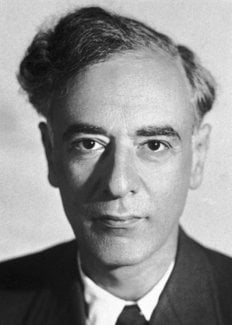
After graduating from the Physical Department of Leningrad University at the age of 19, he began his scientific career at the Leningrad Physico-Technical Institute. The years 1929 – 1931 he spent abroad, partly as a Rockefeller Foundation Fellow, working in Germany, Switzerland, England and, especially, in Copenhagen under Niels Bohr.
During 1932 – 1937 he was head of the Theoretical Department of the Ukrainian Physico-Technical Institute at Kharkov, and since 1937 he has been the head of the Theoretical Department of the Institute for Physical Problems of the Academy of Sciences of the U.S.S.R. in Moscow. Simultaneously he taught constantly as a professor of theoretical physics in the Kharkov and Moscow State Universities.
Landau’s work covers all branches of theoretical physics, ranging from fluid mechanics to quantum field theory. A large portion of his papers refers to the theory of the condensed state. They started in 1936 with a formulation of a general thermodynamical theory of the phase transitions of the second order. After P.L. Kapitsa’s discovery, in 1938, of the superfluidity of liquid helium, Landau began extensive research which led him to the construction of the complete theory of the “quantum liquids” at very low temperatures. His papers of 1941 – 1947 are devoted to the theory of the quantum liquids of the “Bose type”, to which the superfluid liquid helium (the usual isotope He) refers. During 1956-1958 he formulated the theory of the quantum liquids of the “Fermi type”, to which liquid helium of isotope 3He refers.
In 1946 he was elected to the membership of the Academy of Sciences of the U.S.S.R. The U.S.S.R. State Prize was awarded to him several times, and in 1962 he received, jointly with E.M. Lifshitz, the Lenin Science Prize for their Course of Theoretical Physics.
Comments
Post a Comment